Blog Article
Understanding NNN Leases in 2026: A Practical Guide for Tenants
Learn how Triple Net leases really work, where hidden costs appear, and how to model your true monthly occupancy cost before signing.
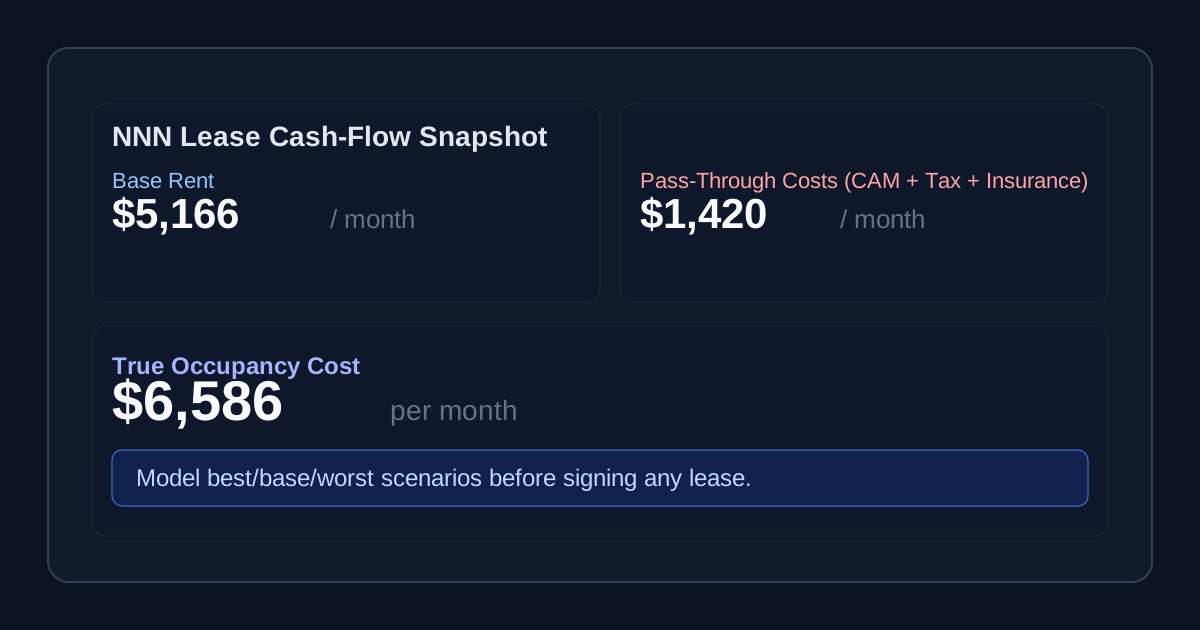
The quote says $28/sf, but your bank account feels $38/sf.
That gap is where most first-time tenants get hurt.
If you skip NNN math, one year-end reconciliation can wipe out a quarter of profit.
This guide gives you the exact framework I use with small teams before they sign.
3 SEO headline options you can test
- 7 NNN Lease Facts Every Tenant Must Know in 2026
- 5 Cost Traps in Triple Net Leases That Destroy Cash Flow
- 9-Minute NNN Lease Check: Find Your True Monthly Occupancy Cost
Why this matters right now
As of January 28, 2026, the Fed kept the federal funds target range at 4.25%-4.50%. Carry costs are lower than the peak, but still sensitive.
As of March 6, 2026, total nonfarm payroll employment increased by 151,000 and unemployment was 4.1%. As of March 12, 2026, CPI rose 0.2% in February and 2.4% year over year, while core CPI also rose 0.2% and 3.0% year over year. Labor and pricing pressure are cooler than peak years, but not gone.
Source links: Federal Reserve statement, BLS Employment Situation, BLS CPI release.
Three field notes from real lease reviews
Experience 1: My own office search in Austin. The broker highlighted base rent first. After tax, insurance, and CAM assumptions, true cost was about 29% higher.
Experience 2: A two-chair dental client in Phoenix. They accepted a "temporary" CAM estimate. The annual true-up hit in month 11 and consumed their hiring budget.
Experience 3: A real public case I reference often. WeWork filed for Chapter 11 in November 2023, then negotiated major future rent reductions by April 2024. Different business model, same lesson: rigid occupancy obligations can break good operations.
Source: WeWork restructuring announcement (Nov 2023), WeWork emergence update (Jun 2024).
Pro Tip (Lease review): Ask for three years of actual operating expense history, not one "current estimate" line in a brochure.
What a Triple Net lease includes
NNN means you pay base rent plus:
- Property tax allocation.
- Building insurance allocation.
- CAM (common area maintenance).
The keyword is allocation. Your share can move even if your business volume does not.
Quick comparison table: quote vs real exposure
| Cost layer | What most listings show | What actually hits cash flow | What to request in writing |
|---|---|---|---|
| Base rent | Clear number | Only one piece of total cost | Full rent schedule by year |
| Property tax | Small footnote | Reassessments can jump payments | Tax history for 3 years |
| Insurance | Short note | Market cycles can shift quickly | Renewal assumptions and carrier notes |
| CAM | Single estimate | Biggest reconciliation surprises | CAM detail, exclusions, and caps |
| Year-end true-up | Often omitted | Lump-sum cash hit risk | Monthly accrual format in your model |
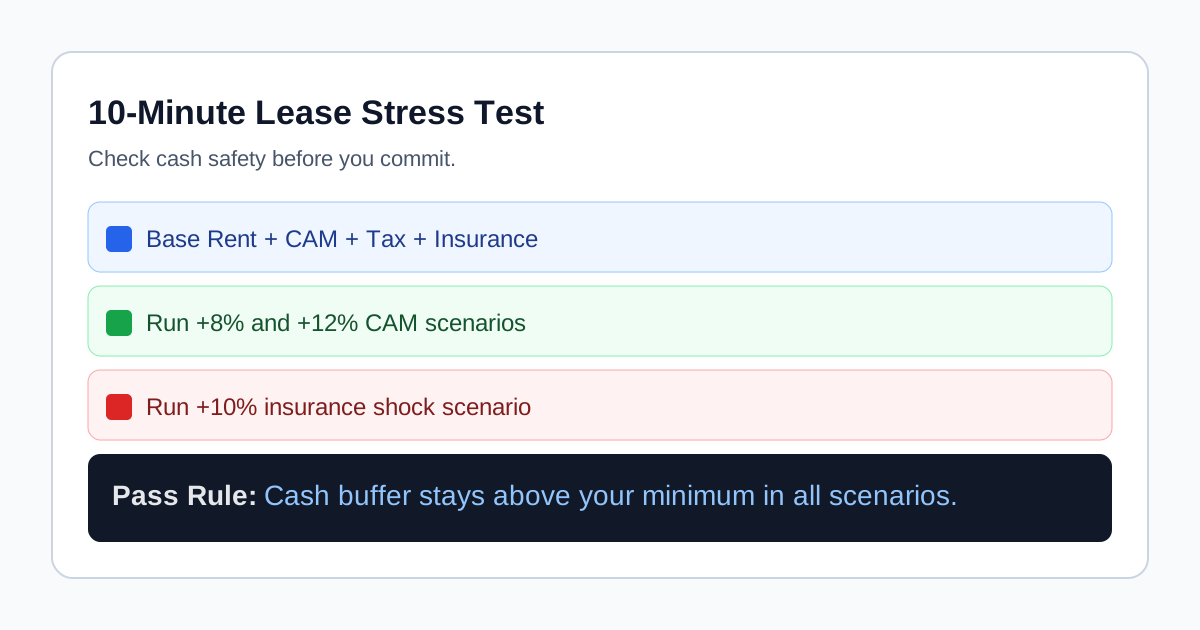
Use this 10-minute tenant workflow
- Build one model for base, expected, and worst case.
- Stress CAM at
+8%and+12%. - Stress insurance at
+10%. - Decide with the worst month, not the average month.
Run this workflow in our Commercial Lease Calculator. Then compare with NNN Lease Traps and Cash-Flow Stress Test Playbook.
Pro Tip (Negotiation): If you cannot get a CAM cap, ask for narrow CAM definitions and annual audit rights.
Final move before you sign
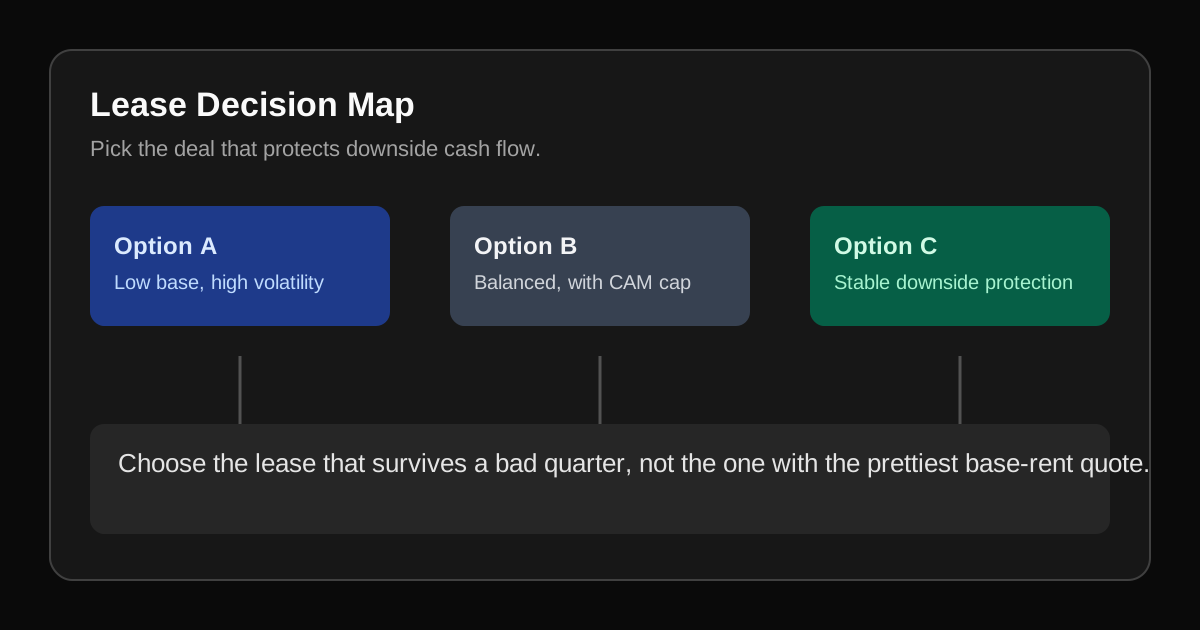
A "cheap" lease is irrelevant if it fails in a bad quarter. Model the downside first. Then negotiate from numbers, not optimism.
If you want, share your draft term sheet in the comments and I can suggest a stress-test checklist. Or open the calculator now and verify your true monthly obligation before you sign.
Meta Description (140 chars): Triple net leases hide costly surprises. Learn the NNN math, compare scenarios, and estimate real occupancy risk before you commit in 2026.